



Plotting molecular electrostatic potential surfaces (MEPS) with ORCA
Research note

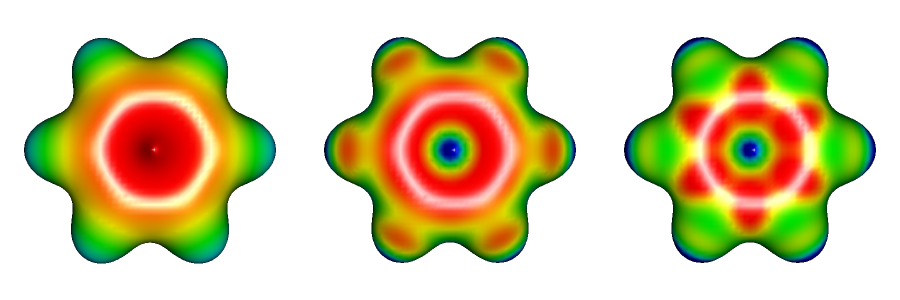
The orca_vpot program calculates the electrostatic potential for a set of points provided by the user. But it can be boring or hard. here is how you can do it.
Quantum Chemistry of Magnetism & Molecular Materials
Q²M³ Blog archive
Browse by subject
Research note
The orca_vpot program calculates the electrostatic potential for a set of points provided by the user. But it can be boring or hard. here is how you can do it.
Research note


ORCA provides a convenient way to plot orbitals and densities in the form of a small binary called orca_plot. Here is how to use it more conveniently.
Research note

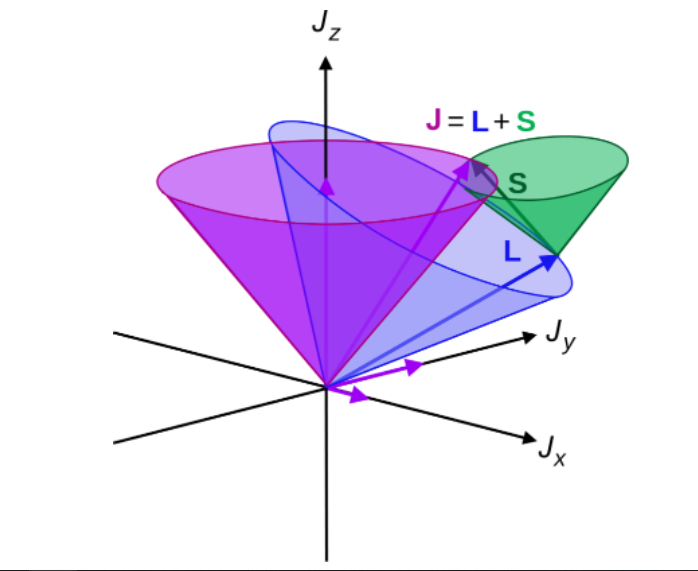
Here’s a longer sketch of what Paul’s comment is describing. In the absence of spin–orbit coupling (SOC), the available states have well-defined spin and orbital angular momentum components which can be separated.…
Research note


Selection rules The intensity of the transition from a state to a state is governed by the transition dipole moment (strictly, it is proportional to ): (1) where is the usual…
Research note


In quantum chemistry, when a nomenclature in which one distinguishes between “static” and “dynamic” correlation is used, “correlation” referrers to all the deficiencies of the Hartree-Fock (HF) single-determinantal approach. For instance, the…
Research note

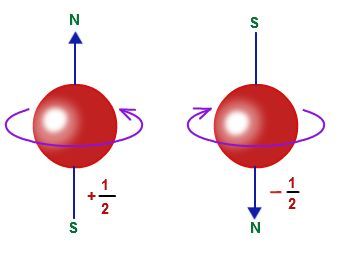
Particles with spin 1/2, like the electron, must perform two 360° rotations to return to their initial state. This concept is hard to visualize but, basically, if we imagine the electron wavefunction…